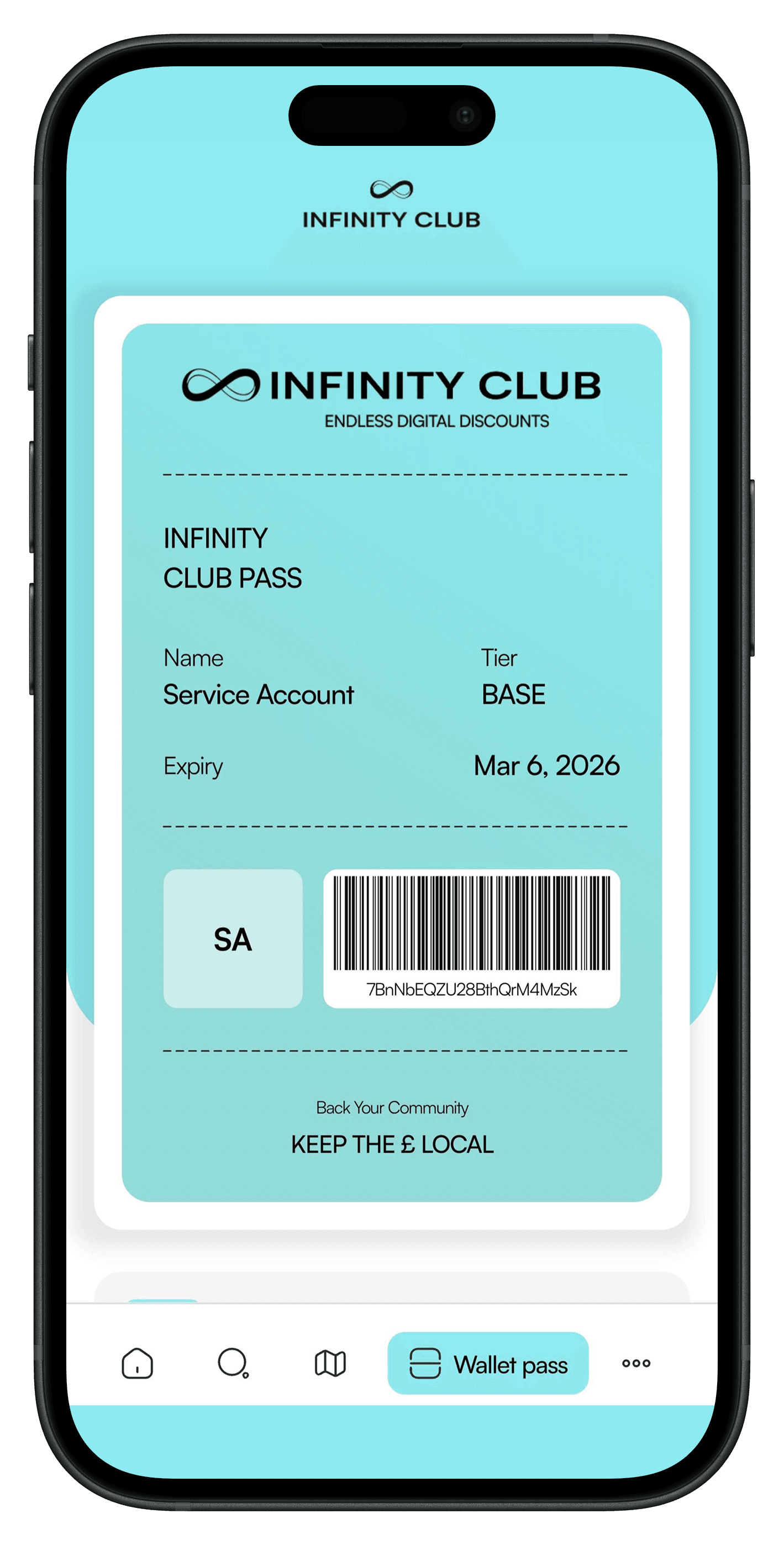
Case study · Digital product build
Engineering the operating layer a membership business runs on
Infinity Club's model connects members, the partners who provide their benefits, and the team coordinating both. When Veda arrived there was a simple website describing the idea. What the business needed was the platform beneath the idea — and that is what was architected and built: an operating layer for members, partners, offers, subscriptions and central admin control.
- problem
- A membership business needed an operating platform, not only a web presence.
- build
- One platform for members, partners, offers and subscriptions.
- outcome
- The club runs day to day within the platform, under administrator control.
- Sector
- Membership & lifestyle
- Engagement
- Platform architecture, product shaping and build
- The system
- Members, partners, offers and subscriptions on one operating layer
- In production
- The club runs day to day inside the platform, under admin control
A three-sided model with nothing to run on
A membership business of this kind is really three connected audiences: members who join and expect ongoing value, partners who supply the offers that create that value, and an internal team that has to keep both sides moving. The commercial logic was well thought through; the infrastructure to execute it did not yet exist.
The website that existed could describe the club. It could not enrol a member, onboard a partner, publish an offer, take a subscription or give the team a view of any of it.
Defining the platform, not the page
The first engineering decision was about the unit of work. This was not a website project with extra features — it was a digital product: a platform whose architecture had to come from the business model itself.
So the shaping work started with product questions that carry commercial consequences: what a membership is over time, how a partner enters and stays accountable, how an offer lives and expires, and what the team must control without asking a developer. The answers became the architecture.
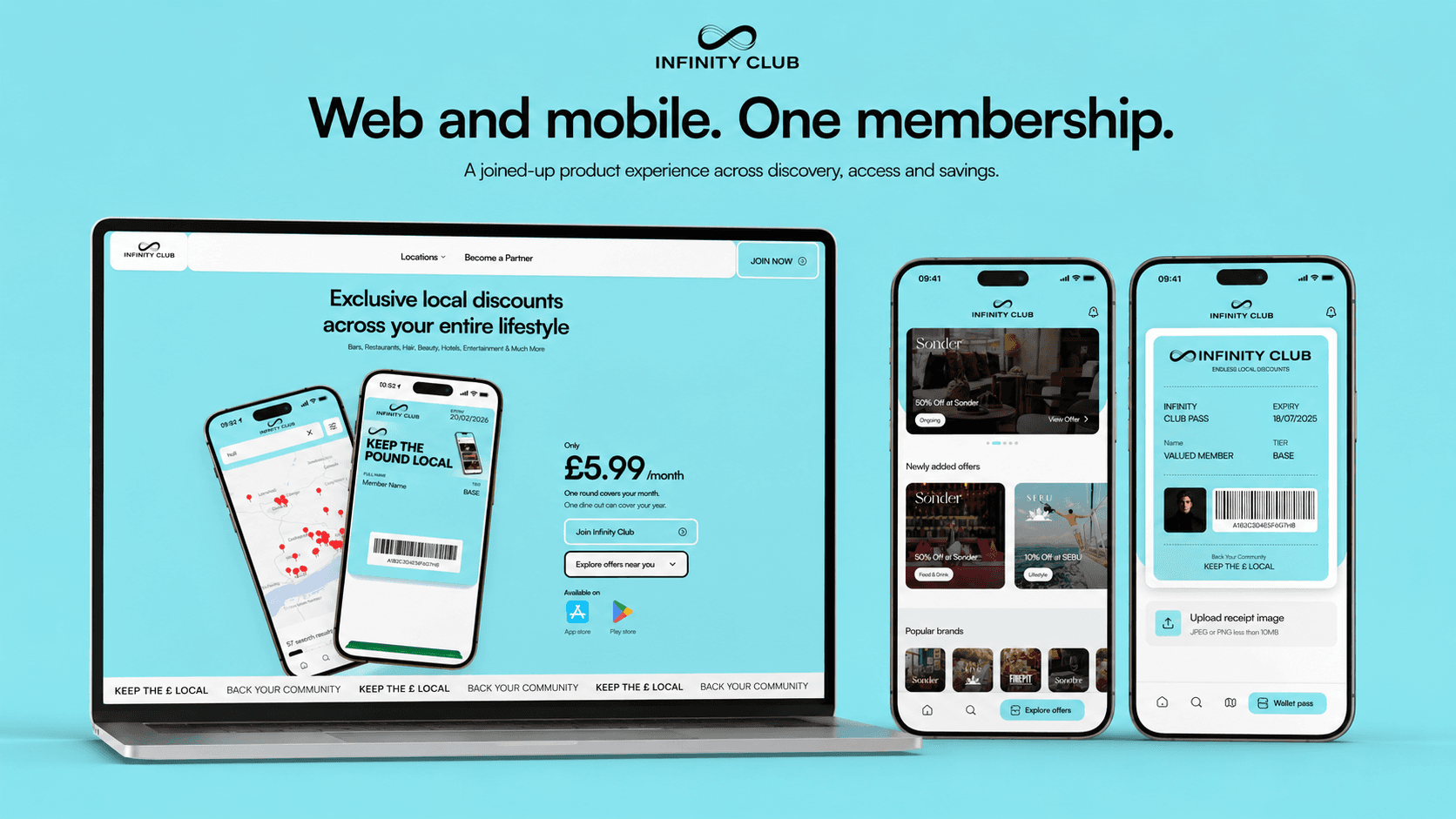
Three roles, one system
The platform was architected around its three roles from the start — not as three separate builds, but as one system where each audience gets the surface it needs.
- Members — joining, subscribing and accessing offers as a structured, ongoing relationship
- Partners — a managed route into the ecosystem, with their offers handled as first-class objects in the system
- Administrators — a central control surface across everything — members, partners, offers and subscriptions in one place
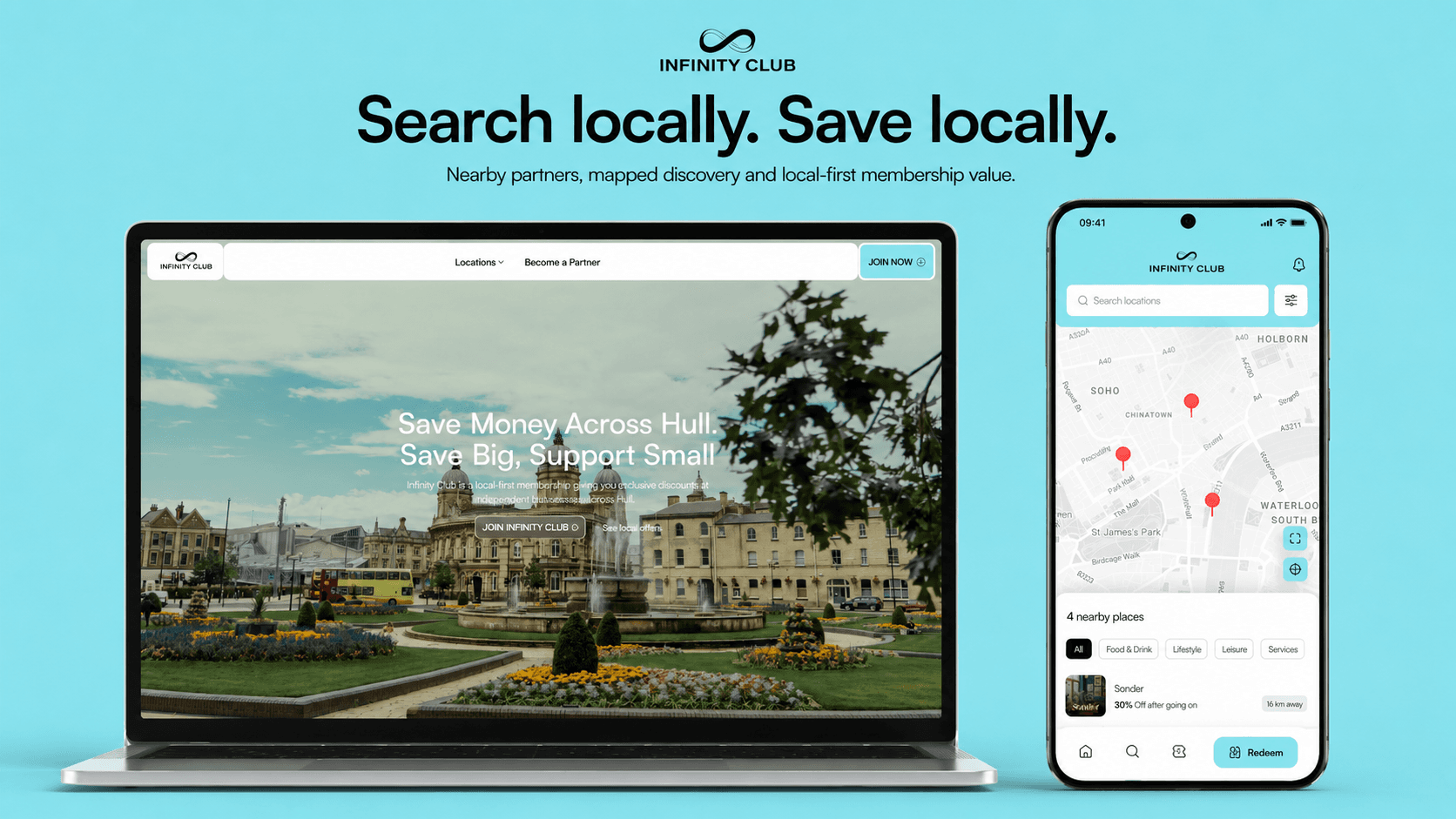
Subscriptions and offers as product mechanics
Recurring membership and partner offers are the club's commercial engine, so they were engineered as product mechanics rather than one-off features: things the business can create, change and retire itself as the club evolves.
That distinction is what separates a platform from a brochure with a payment form. The mechanics belong to the business, and the system is built for long-term product evolution rather than a single launch state.
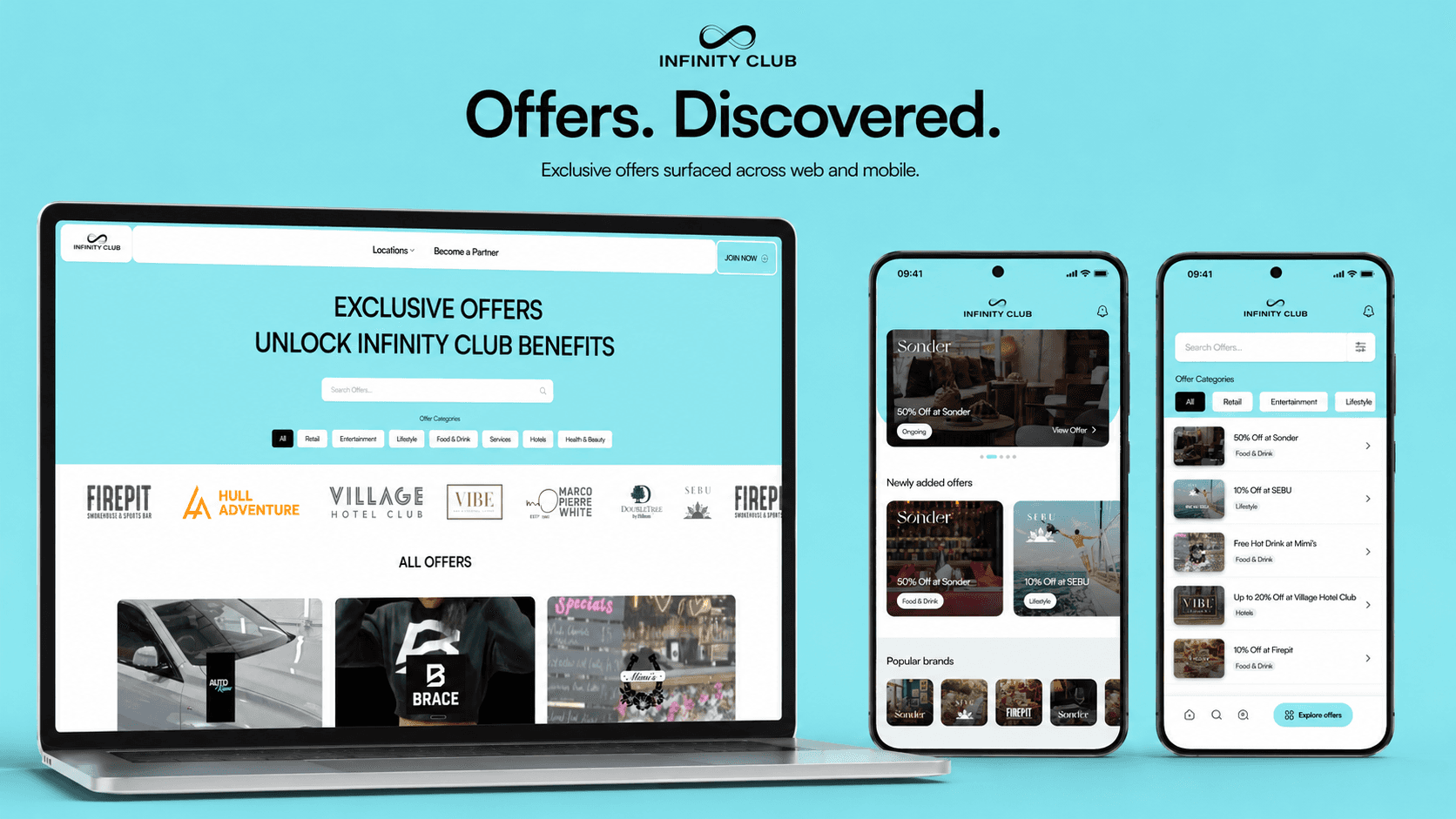
The admin control surface
The least glamorous part of the build was deliberately treated as the most important: the admin layer. If the team cannot see and control the moving parts, a membership platform decays into manual coordination with a nicer front end.
The control surface gives the team direct, self-serve command of the operating layer — who the members are, which partners are active, what is on offer — so running the club is an in-system activity, not an around-the-system one.
From presence to platform
Infinity Club now runs on the system rather than beside it. Joining, subscribing, partnering and administering all happen inside one platform, and the business model that existed on paper exists in production.
Because the mechanics are operable by the team, growth is a content-and-commercial decision rather than an engineering request — which is exactly where a young platform business needs its constraint to sit.
What this proves
What the Infinity Club build demonstrates
A digital product engagement in full: the platform's architecture derived from the business model, subscriptions and offers built as operable product mechanics, and an admin surface that keeps control of the system with the people who run it.
- Platform architecture derived from the business model, not a feature list
- Member, partner and admin roles engineered as one coherent system
- Subscriptions and offers built as product mechanics the business operates itself
- A central admin control surface designed for non-technical operators
Have a model that needs a platform underneath it?
If the business logic is clear but the system to run it does not exist yet, architecture and delivery need to follow the operating model. Tell us where work gets held up and we will explore the software, integration and automation priorities a Business Improvement Partnership could deliver.